
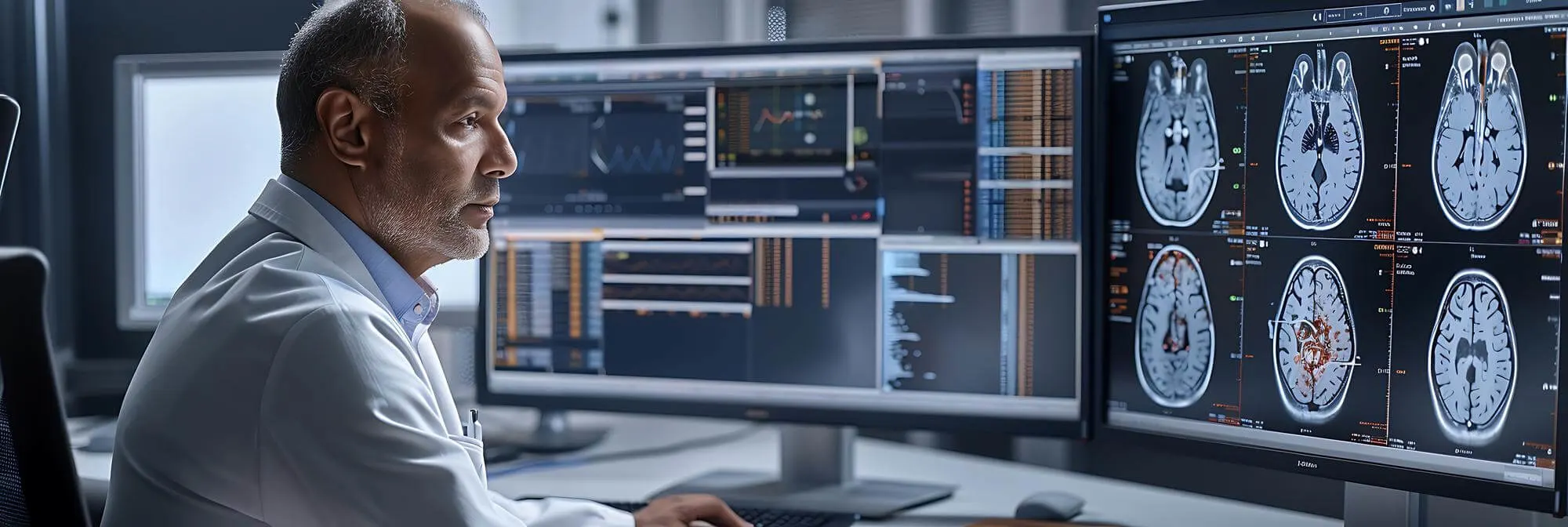
Over the past several years, clinical imaging has evolved from a supporting trial function into a critical determinant of operational performance. In 2026, that shift is no longer emerging — it is firmly established.
Across therapeutic areas, imaging now plays a central role in endpoint determination, safety monitoring, and regulatory evaluation. As trial designs become more complex and data volumes increase, the operational model behind imaging has come under greater scrutiny. For contract research organizations (CROs), the question is no longer whether imaging matters, but whether it is structured in a way that protects timelines, cost predictability, and sponsor confidence.
The Structural Shifts Reshaping Clinical Imaging
Over the past 24 months, several developments have accelerated imaging’s transition from a technical service to an operational discipline.
Regulatory expectations have become more explicit. The U.S. Food and Drug Administration’s guidance on clinical trial imaging endpoint process standards, along with its more recent draft framework outlining considerations for the use of artificial intelligence in regulatory decision-making, reinforces the importance of defined context-of-use, standardized processes, and documented model credibility. Imaging workflows must now demonstrate not only interpretive rigor, but traceability, governance, and inspection readiness.
Workforce dynamics are also exerting pressure. Reports from organizations such as the Royal College of Radiologists and peer-reviewed analyses published in Radiology (RSNA) continue to highlight sustained growth in imaging demand relative to specialist availability. Even when trials operate outside public health systems, global reader capacity directly influences turnaround time consistency and adjudication efficiency. Variability in availability increasingly translates into variability in trial timelines.
Artificial intelligence has matured as well. What was once exploratory is now being applied in qualified development contexts. Recent FDA qualification of AI-based tools for specific drug development use cases signals a shift toward structured integration. The competitive distinction no longer lies in possessing AI tools, but in embedding them within compliant, production-grade workflows that support oversight and documentation.
Despite technological progress, fragmentation remains common across clinical imaging programs. Image transfer, interpretation, quality control, and reporting frequently occur across separate systems and vendors. Each additional interface introduces handoffs, reconciliation requirements, and potential latency. While manageable at limited scale, fragmentation becomes operationally fragile when multiplied across global, multi-study portfolios.
Taken together, these forces point to a clear reality: imaging performance now directly influences trial velocity, cost predictability, and regulatory confidence.
The CRO Perspective: Where Friction Emerges
Within CRO environments, imaging friction tends to surface in predictable areas.
Study startups may extend beyond projections due to charter alignment, site qualification, workflow configuration, and reader calibration. Once active, programs can encounter variability in reader availability, inconsistent application of response criteria, or delayed quality control detection. Visibility across distributed vendors is often limited, reducing the ability to intervene early.
Individually, these issues appear manageable. Collectively, across multicenter and global trials, they create milestone pressure, re-reads, and incremental cost.
It is in this cumulative effect that imaging shifts from a technical function to a strategic lever.
Reframing Clinical Imaging as an Operating Model
The strategic shift in 2026 is not about layering new tools onto legacy infrastructure. It is about consolidating imaging into a centralized, workflow-driven operating model.
An effective clinical imaging framework for CROs now requires:
- Protocol-driven workflow orchestration
- Integrated primary, secondary, and adjudication reads
- Continuous case-level quality assurance with complete audit trails
- Real-time operational dashboards
- Embedded AI-assisted triage and workload balancing
- Scalable reader networks aligned to study demand
When these elements operate within a unified environment rather than across fragmented systems, measurable outcomes follow. Study activation accelerates. Turnaround variability decreases. Quality oversight becomes proactive rather than reactive. Capacity scales without proportional increases in fixed headcount.
Several CROs are now moving toward centralized clinical imaging models built around these principles. Platforms such as GenPhase, supported by ONIX AI™, reflect this structural shift by integrating workflow orchestration, case assignment, quality assurance, and embedded AI within a single operating layer. The emphasis is not simply on faster reads, but on creating operational resilience — ensuring that imaging scales with the demands of modern trials while remaining compliant and inspection-ready.
In this model, imaging begins to support velocity rather than threaten it.
Why 2026 Represents a Tipping Point
The cumulative effect of regulatory clarity, AI maturity, workforce constraints, and operational complexity has elevated imaging infrastructure to a strategic consideration for CRO leadership. Sponsors increasingly assess not only scientific expertise, but also operational transparency and resilience.
CROs that treat clinical imaging as structured infrastructure, rather than a distributed vendor service, position themselves to protect margins, reduce timeline risk, and strengthen sponsor partnerships.
Those that continue to manage imaging through fragmented systems may find that inefficiencies compound as trial complexity increases.
The competitive distinction in 2026 is therefore structural, not incremental.
Clinical imaging is no longer simply about interpretation.It is about orchestration, control, and consistency.
And for CROs navigating increasingly complex development landscapes, that distinction matters.


