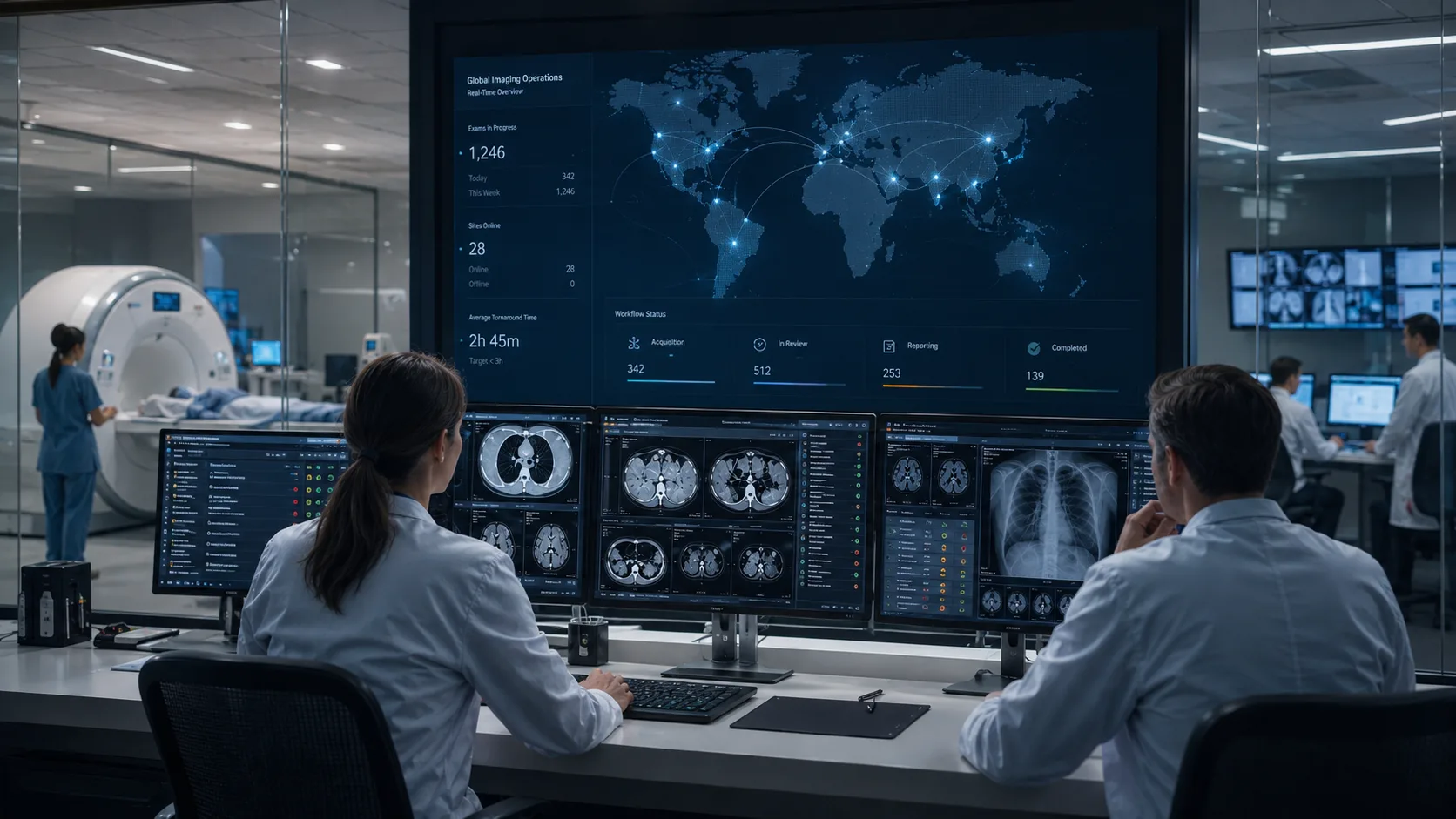
Clinical imaging workflows are becoming increasingly complex as studies expand across multiple sites and geographies. In this interview, Dr. Ankur Kumar, MD, Head of Clinical Operations at GenPhase AI, shares how integrated AI-enabled workflows are helping clinical teams improve operational efficiency, strengthen quality control, and support consistent, audit-ready imaging practices across clinical trials.

From Fragmented Workflows to an Integrated Platform
As the Head of Clinical Operations at ONIX AI, I work closely with radiologists, clinical trial sponsors, imaging sites, and product teams to ensure high-quality, efficient imaging workflows. My responsibilities include operational strategy, workflow optimization, quality assurance, reader enablement, and supporting the implementation of AI-enabled imaging solutions across multi-site clinical studies. A major focus of my role is ensuring that technology complements clinical expertise while maintaining regulatory compliance and data integrity.
Traditional workflows involved multiple disconnected systems, manual case allocation, protocol verification, report transcription, and spreadsheet-based tracking. These handoffs often introduced delays, communication gaps, and avoidable rework. Standardization across sites was also challenging.
The most common challenges included protocol deviations being identified late, manual transcription errors, uneven case distribution, inconsistent documentation, and maintaining complete audit readiness across complex studies.
How ONIX AI Improves Clinical Imaging Operations
Pre-read protocol quality control helps identify protocol issues early. Intelligent case routing balances workloads automatically. Voice-to-structured reporting accelerates standardized reporting. BICR workflow automation simplifies dual reads and adjudications. Comprehensive audit trails improve transparency and inspection readiness.
Protocol compliance is now assessed much earlier in the workflow, allowing teams to address potential issues before interpretation begins. This reduces downstream queries and unnecessary repeat activities.
Automated routing improves workload balance, reduces manual coordination, and helps readers focus on reporting rather than operational logistics, contributing to more predictable turnaround times.
Key Operational Takeaways
Based on Dr. Kumar’s experience, ONIX AI helps clinical teams:
- Identify protocol issues earlier in the imaging workflow
- Reduce manual coordination and repetitive administrative tasks
- Improve consistency through structured reporting
- Balance reader workloads more effectively
- Strengthen audit readiness with comprehensive audit trails
Delivering Quality at Scale
Although exact metrics vary by study, teams have consistently observed smoother workflows, fewer manual touch points, improved reporting consistency, and faster operational coordination. Formal KPIs are monitored at the individual study level.
In one multi-site workflow, automated protocol validation identified imaging inconsistencies before formal reads began. Early intervention prevented downstream queries and avoided unnecessary operational rework.
ONIX automates reader assignment, detects concordance or discordance, triggers adjudication workflows when required, and maintains complete documentation throughout the process, significantly reducing manual coordination.
The platform presents prior measurements, annotations, and complete audit history in a structured manner, enabling adjudicators to make informed and well-documented decisions.
Standardized workflows, consistent measurement tools, centralized quality assurance, and comprehensive audit trails help maintain harmonized practices across readers and geographies.
Integration and Adoption
ONIX is designed to integrate with standard PACS environments and sponsor systems using established interoperability standards. Careful implementation planning, validation, and user training help ensure smooth deployment.
Adoption has been positive because the platform reduces administrative burden without disrupting clinical decision-making. Structured onboarding and continuous support have been key to successful change management.
Looking Ahead
I would like to see even deeper AI-assisted lesion analytics, richer predictive operational dashboards, and broader interoperability with healthcare ecosystems, and additional automation that further reduces repetitive administrative work while keeping clinicians in control.
Closing Thoughts
As clinical imaging studies continue to grow in complexity, operational efficiency and quality remain closely linked. Dr. Kumar’s experience highlights how integrating quality control, workflow automation, and standardized reporting can help clinical teams reduce administrative burden while maintaining the high standards required for modern clinical trials.
Ready to see ONIX AI in action?
Talk to our clinical operations team about bringing an integrated, audit-ready imaging workflow to your next study.
Book a 20-Minute Discovery CallAbout GenPhase.ai
GenPhase.ai is an AI-native clinical imaging company providing end-to-end imaging execution for CROs and biopharma trials — powered by ONIX AI™ and led by credentialed radiologists. To learn more or discuss your imaging needs, reach out to our team on LinkedIn.